


0 Comments
Bespoke WordPress Developer: What the Word Actually Means and When You’re Paying for Something You Don’t Need

Understanding the scope and cost of bespoke WordPress development.
Every agency website uses the same handful of words to sound premium and worth the higher price. Custom. Tailored. Bespoke. None of them come with a fixed definition anyone has to follow.
This gap matters when you are comparing quotes for a website project. Two providers can use the same word to describe two very different scopes of work.
This article breaks down what the word actually covers. It explains when paying extra makes sense, and when it does not, so you can read any proposal more critically.
The Word Has No Official Definition
There is no governing body that decides what counts as bespoke work. Any developer or agency can apply the label to almost anything they build.
This creates real confusion for buyers. A business owner comparing quotes has no reliable way to know what each provider actually means.
Two proposals using identical language can represent very different amounts of original work. Only asking direct questions reveals the difference, since the word itself settles nothing.
What the Term Usually Covers in Practice
Fully Custom Code Written From Scratch
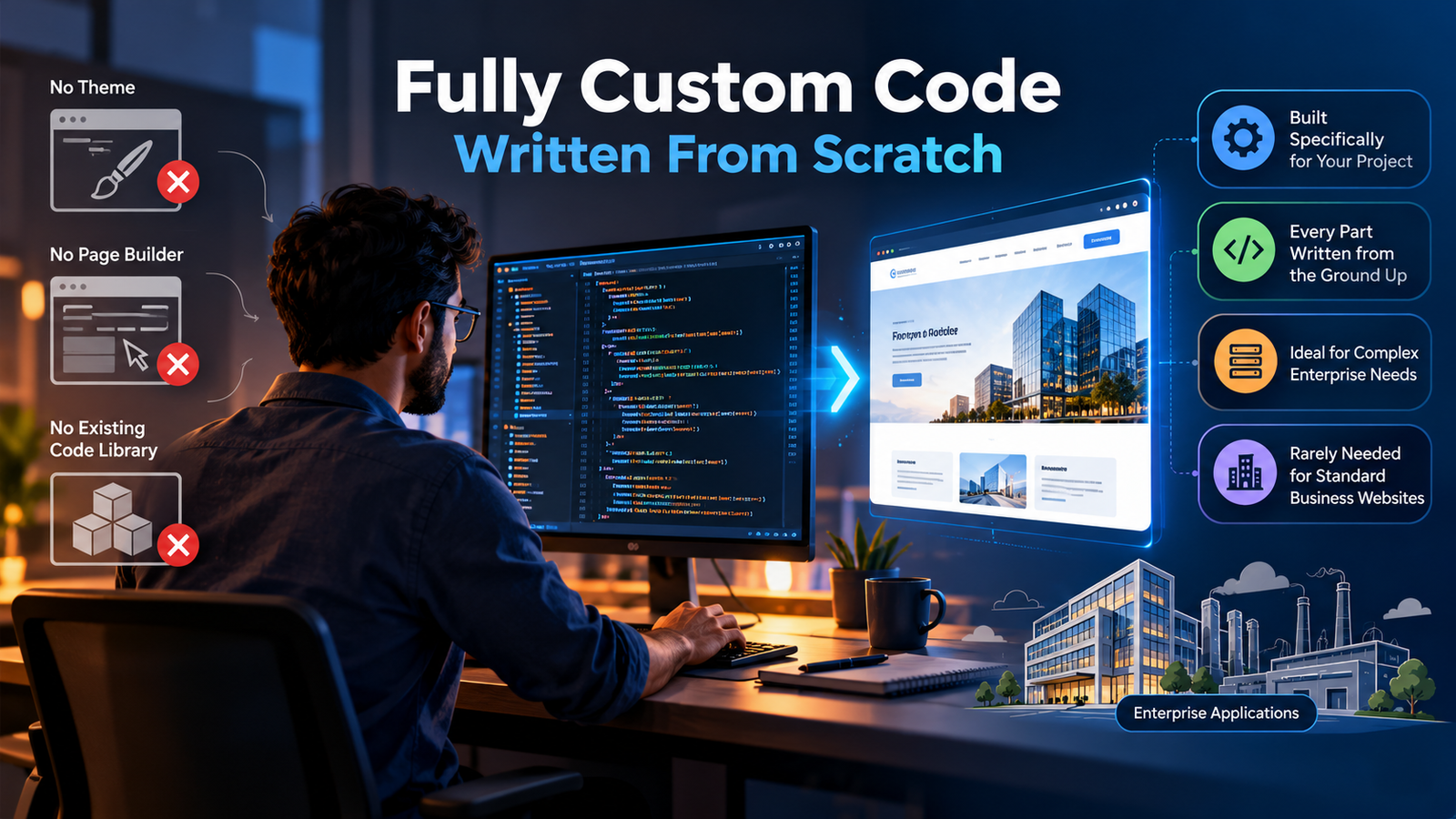
A website developed from scratch for unique project requirements.
At one end, the term describes a site built without a theme, page builder, or existing code library. Every part of the site gets written specifically for that one project.
This is the most expensive interpretation, and the rarest in practice. Full custom code from the ground up takes far longer than most projects actually require.
Enterprise applications with unusual technical demands sometimes justify this approach. A standard business website rarely does.
A Design Layer Built on Top of WordPress
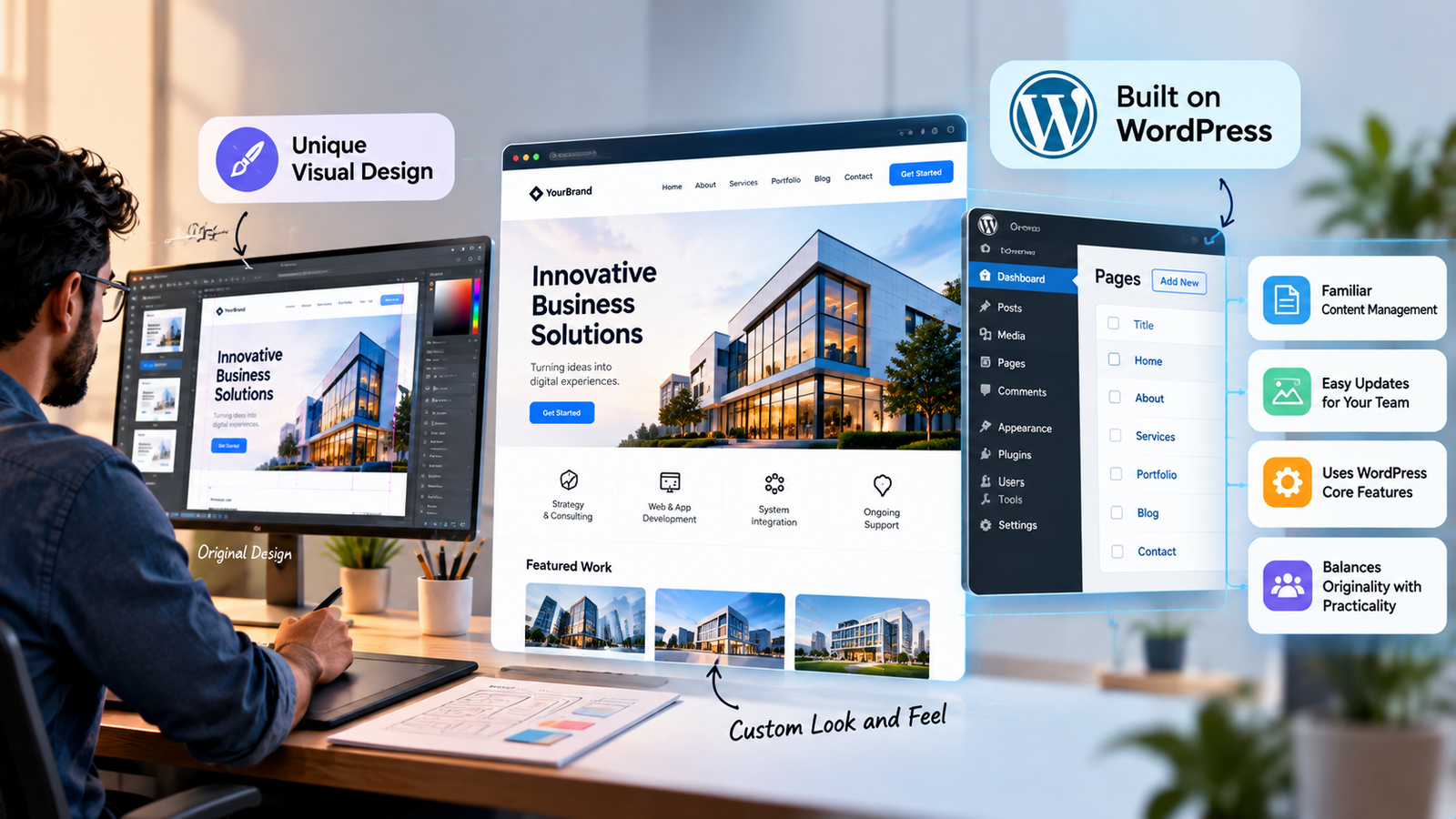
Unique visual design powered by WordPress functionality.
A more common interpretation involves original design work paired with WordPress as the underlying content system. The visual design is unique, but the platform underneath still follows familiar patterns.
This approach balances originality with practicality. It avoids reinventing basic functionality that WordPress already handles well.
Most agencies describing their work this way are being reasonably accurate. The term still sounds grander than the actual process involved. This is normal marketing language rather than deception.
A Heavily Modified Theme Marketed as Custom
At the lighter end, some providers apply the label to a pre-built theme with substantial customization. The result can look distinctive, even though the underlying structure is not unique.
This is not necessarily dishonest, but it changes what you should expect to pay. Modifying an existing theme costs less than building from nothing.
The difference matters most when pricing assumes ground-up work. Receiving heavily customized template work instead is a mismatch worth catching early.
When Hiring a Bespoke WordPress Developer Actually Makes Sense
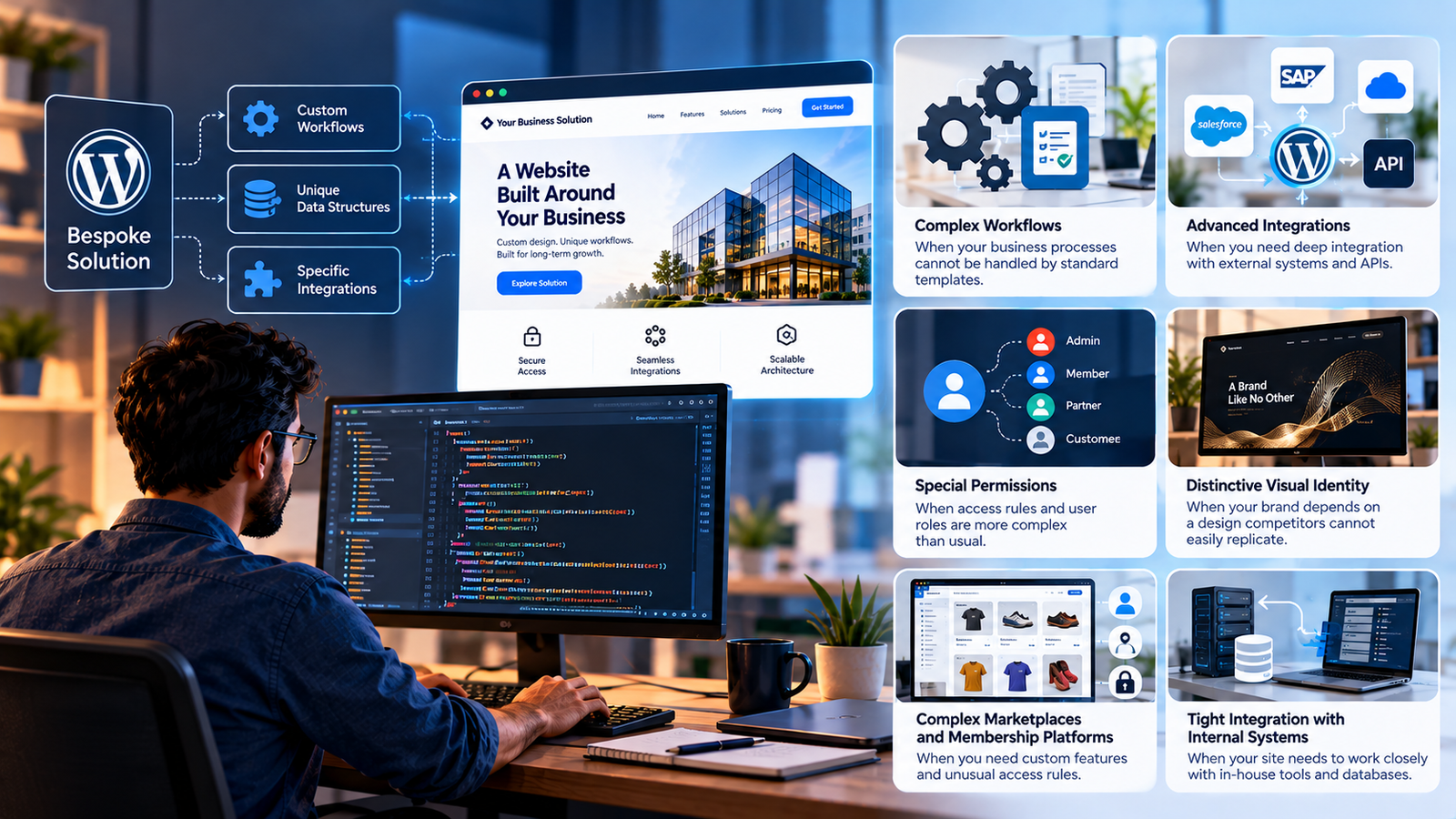
Bespoke WordPress development enables complex workflows, advanced integrations, custom permissions, and unique business requirements.
Paying for a fully custom build makes sense when your business runs on workflows no template supports. A bespoke wordpress developer earns their cost when integrations, permissions, or data structures are genuinely unusual.
This also applies when your brand depends on a visual identity competitors cannot easily replicate. A distinctive, ground-up design becomes a real business asset in that situation, not just a nice extra.
Complex marketplaces and membership platforms with unusual access rules fall into this category regularly. So do tools tightly integrated with internal systems.
When You Are Paying for a Word, Not the Work
A standard business site, blog, or small online store rarely needs work built entirely from scratch. Most of what these sites require- forms, page layouts, basic e-commerce- already exists in well-built, reliable systems.
Paying a premium price for a fully custom label here often buys marketing language, not additional value. The finished site may function identically to a well-customized template at a fraction of the cost.
Custom wordpress web development built on solid existing foundations frequently outperforms a fully custom build on cost and delivery time. The label alone should never be the deciding factor.
A site that launches faster and costs less is rarely the wrong choice. This holds true as long as it meets every actual business requirement.
How Pricing Signals the Real Scope
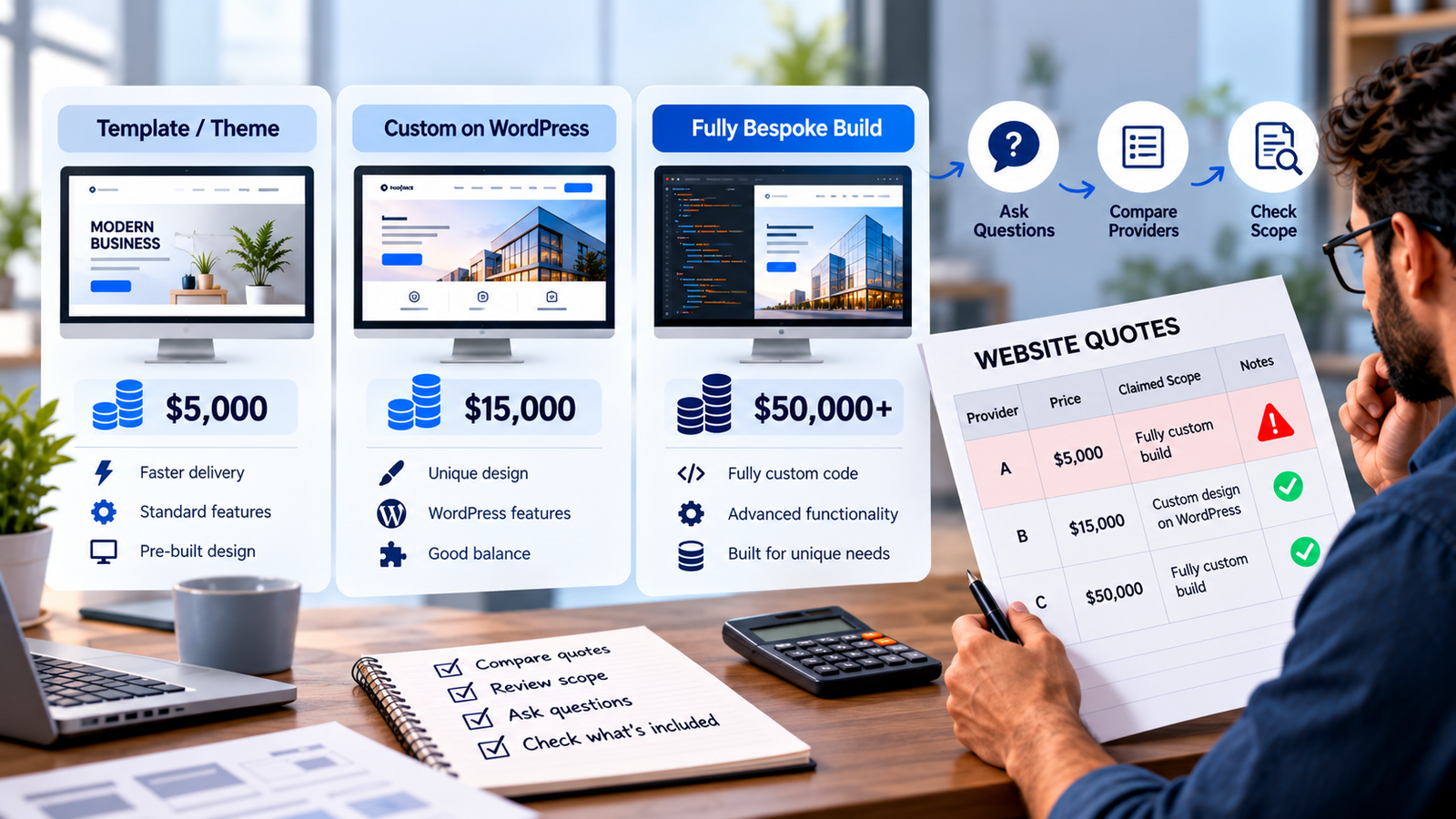
Website costs reflect the complexity and scope of development.
Price is often the clearest signal of what you are actually buying. It tends to be more reliable than the marketing language on a proposal.
Fully custom, ground-up builds carry development costs that a heavily modified theme simply does not. A quote sitting close to a typical template project’s cost, despite claiming a fully bespoke build, deserves a direct conversation.
Either the scope is smaller than advertised, or the number is unrealistic for the described work. Comparing quotes from several providers for the same scope often reveals this gap quickly. This works even before any code gets written.
Questions to Ask Before Paying a Custom Premium
Ask a provider to define exactly what they mean by the term before signing anything. A specific, detailed answer is a good sign. A vague one is not.
Ask what percentage of the build uses pre-existing code versus code written entirely for your project. This single number cuts through most marketing language quickly.
Ask for examples of past projects at a similar scope, and compare the actual deliverables against your own requirements. A portfolio full of visually similar sites suggests templated customization, not fully original work.
Ask how the pricing changes if you choose a less custom approach instead. A provider confident in their reasoning will explain the tradeoff clearly, rather than defending the premium term alone.
Ask how long a comparable project has taken for past clients. A timeline that matches a much simpler build is worth questioning directly.
Conclusion
A single marketing word cannot tell you what you are actually buying. Two providers using the exact same term can be describing entirely different amounts of original work.
Understanding what the term covers protects your budget regardless of which provider you choose. Asking specific questions before signing matters more than the label on the proposal. The right choice depends on your actual requirements, not the word attached to the quote.
 |
GUEST CONTRIBUTOR Alex Carter WordPress Development Specialist |
About the Author
I’m Alex Carter, a WordPress Development Specialist at WordSuccor, specializing in custom WordPress development, WooCommerce solutions, and website optimization. I help businesses build scalable, user-friendly websites that support their digital growth.
Editorial note:This article is a guest contribution by Alex Carter, WordPress Development Specialist at WordSuccor. The views and opinions expressed are those of the contributor