



0 Comments
The Digital Marketing Gaps Most Small Businesses Don’t Notice
GUEST CONTRIBUTION / DIGITAL MARKETING & BUSINESS OPERATIONS
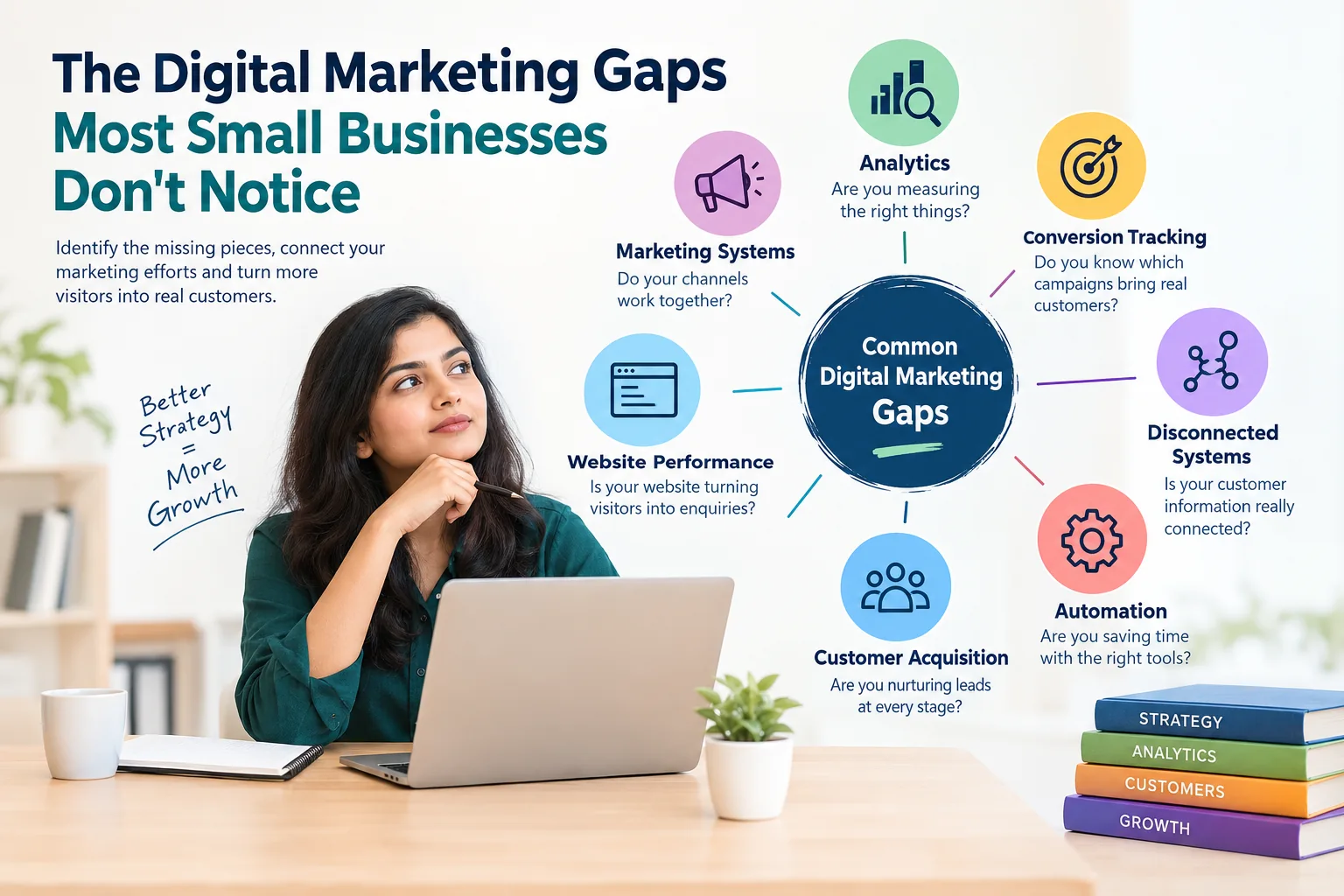
A business can invest in Google Ads, publish regularly on social media and attract visitors through its website, yet still struggle to generate consistent sales. When this happens, the first response is often to increase the advertising budget or try another platform.
More marketing activity, however, does not automatically solve the problem. In many cases, the real issue lies in the gaps between marketing, customer data and the processes used to manage enquiries. These gaps can be difficult to spot when each channel is reviewed separately.
For example, a campaign may generate enquiries that are not followed up promptly. A website may attract visitors without showing which pages encourage them to make contact. Customer details may also be spread across WhatsApp, email, spreadsheets and advertising platforms, making it difficult for teams to see the full customer journey.
These are not simply marketing issues. They affect customer acquisition, day-to-day operations and the ability to make informed business decisions. Understanding how the different systems work together can help a business improve the value of its existing marketing activity before spending more.
Marketing Analytics: Are You Measuring the Right Things?
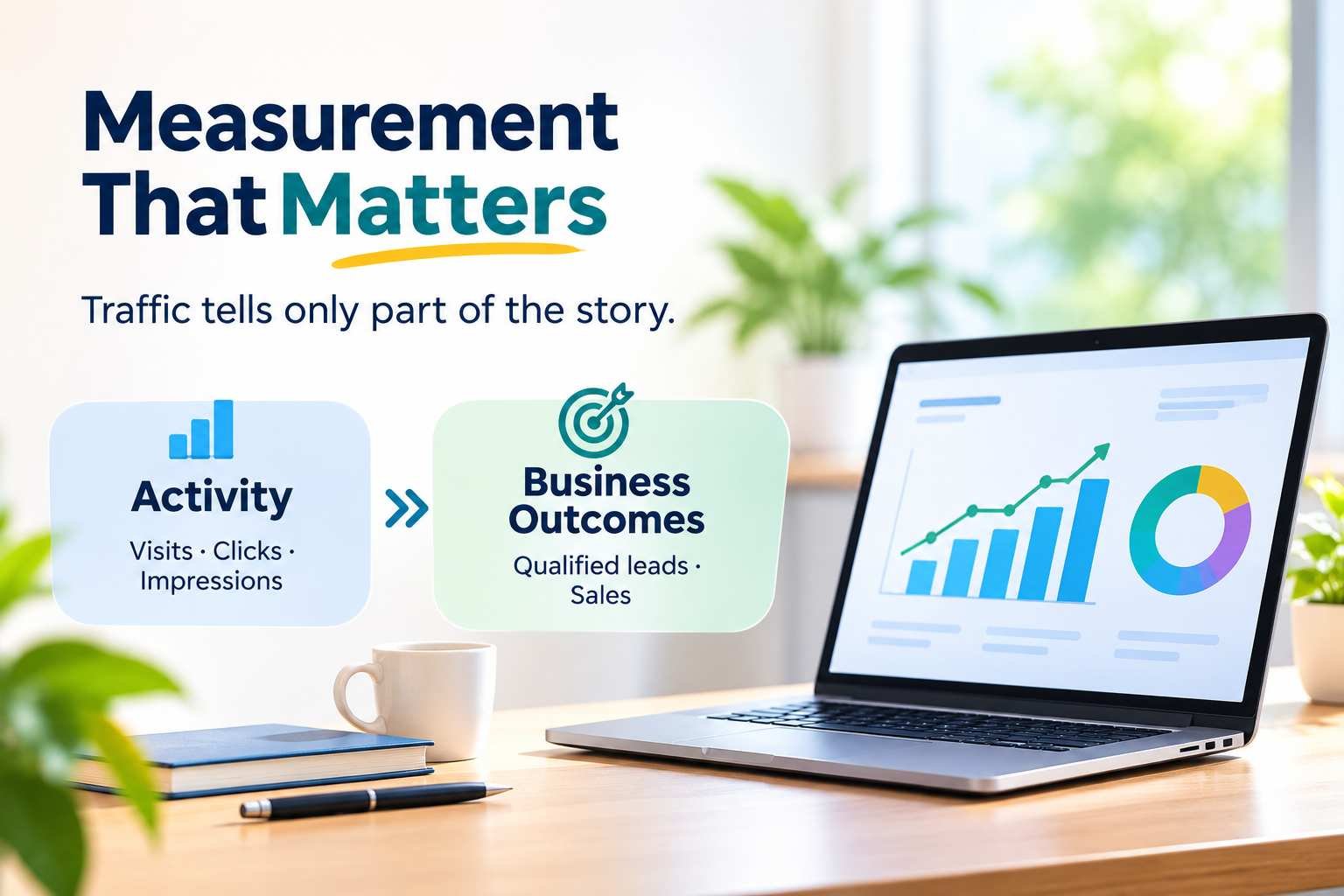
Website visits, social media followers, impressions and advertising clicks can show whether people are noticing a business. They do not, on their own, show whether marketing is contributing to revenue.
Imagine a website receives 2,000 visits in a month but generates only five enquiries. The traffic figure may look encouraging, but the small number of enquiries raises important questions. Is the website attracting the right audience? Can visitors quickly find the information they need? Is the enquiry form difficult to complete? Are the service details and calls to action clear?
Without suitable measurement, it is difficult to identify where visitors are dropping out. A business should choose performance indicators that reflect its objectives. For a lead-generation business, useful measures may include:
- Number of qualified enquiries received
- Website enquiry-form completion rate
- Calls and WhatsApp enquiries
- Cost per qualified lead
- Landing-page performance
- Percentage of enquiries converted into customers
Google Analytics 4 can record important website interactions, such as form submissions and purchases, as key events. These measurements are more useful when they are connected to business goals and reviewed alongside lead quality and sales results. A rise in website activity is worth investigating, but it should not automatically be treated as business growth.
Missing Conversion Tracking Creates Blind Spots
A business may advertise on Google and Meta at the same time and receive visits, calls or messages from both platforms. If it does not track meaningful actions, it may be unable to tell which campaigns are generating valuable enquiries or customers.
Conversion tracking helps connect marketing activity with actions that matter to the business. Depending on the business model, these actions may include:
- A successfully submitted enquiry form
- A phone call generated through an advertising campaign
- A customer sending a message through WhatsApp
- A completed appointment booking or purchase
It is important to distinguish between an initial interaction and a completed business outcome. For example, a visitor clicking a WhatsApp button indicates interest, but it does not prove that the visitor sent a message, qualified as a lead or became a customer.
A more useful measurement process follows the enquiry through the next stages: contact received, lead qualified, follow-up completed and sale recorded. Where possible, campaign and lead-source information should be retained in the customer record. This gives the business a clearer basis for comparing channels by qualified leads and sales, rather than clicks alone.
Where leads get lost
Disconnected tools create invisible hand-offs.
The difficulty often lies between channels, systems and people—not in any individual tool.
Disconnected Marketing Systems Make Customer Information Difficult to Manage
Small businesses often use several tools to manage everyday activity. One employee may respond to social media messages, another may record customer details in a spreadsheet, while the sales team handles enquiries by phone and WhatsApp. Each tool may work adequately on its own, but problems arise when the information cannot be shared.
Consider a customer who discovers a company through Google, submits an enquiry through its website and later follows up on WhatsApp. If the sales team cannot see the original enquiry, the customer may have to repeat the same details. Important context can be missed, responses may be delayed and more than one employee may contact the same person.
Disconnected systems can lead to duplicate records, missed enquiries, inconsistent communication, repeated manual data entry and limited visibility into the sales process. They can also make it harder to understand which marketing channel introduced a customer.
A customer relationship management (CRM) system can provide a central place to store customer details and record interactions. For a related operational perspective, see Primewayz’s business systems integration and workflow automation approach. Where appropriate, website forms, email tools, CRM software and advertising data can be connected so that relevant information moves between systems. The aim is not to purchase every available platform. It is to make the tools already in use support one consistent process.
Customer Acquisition Does Not End When an Enquiry Arrives
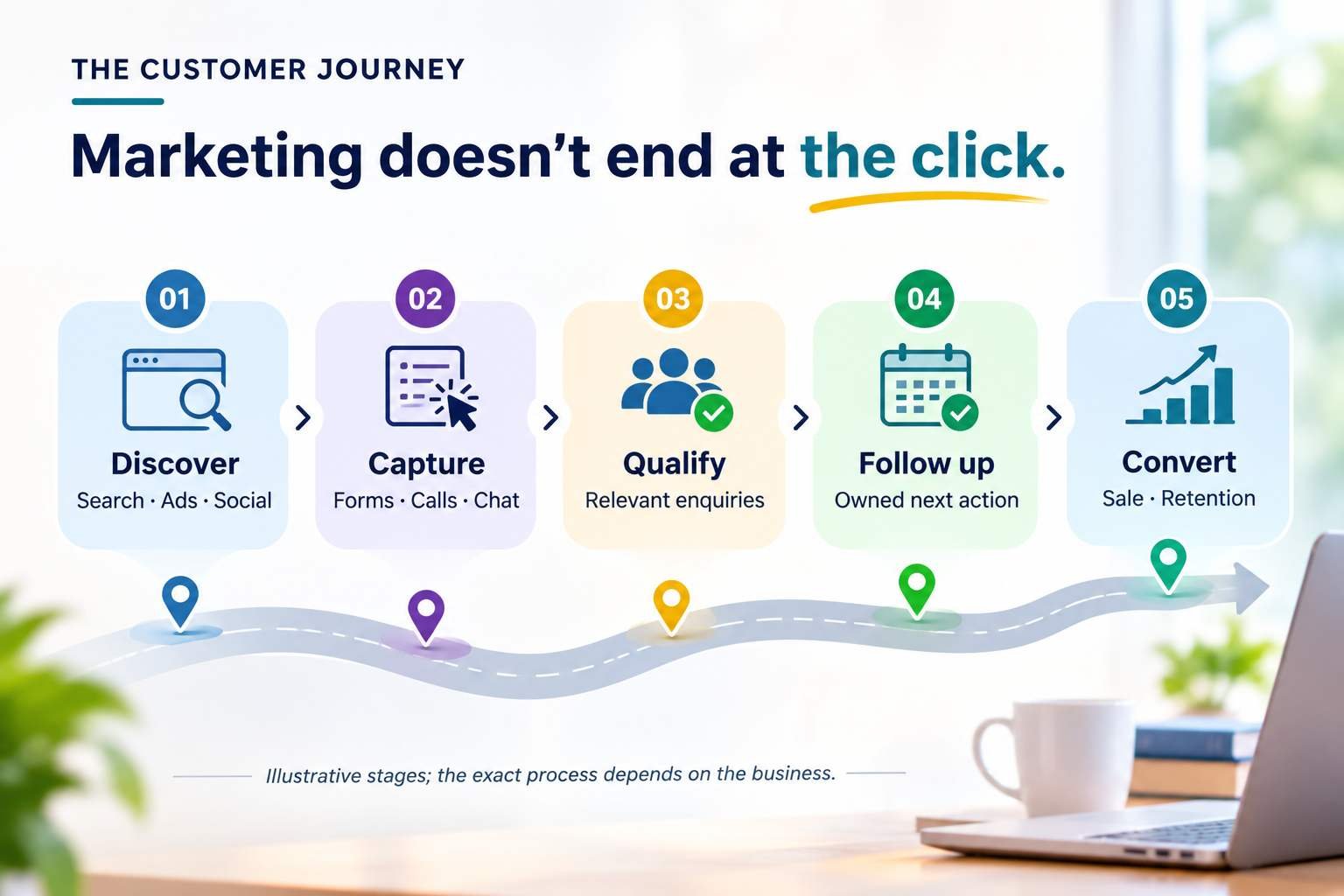
Generating an enquiry is an important milestone, but it is only the beginning of the customer-acquisition process. A campaign might generate 30 enquiries, yet some may never receive a response. If a business follows up with only a portion of those contacts, it may lose opportunities before a sales conversation even begins.
A basic lead-management process should cover the full journey:
- Lead generation: identify how people discover the business, such as search, social media, advertising or referrals.
- Lead capture: collect contact details through a website form, phone call, messaging platform or another suitable channel.
- Lead qualification: understand the person’s requirement, budget, timeframe and level of interest.
- Follow-up: provide relevant information, answer questions and agree on the next step.
- Sales outcome: record whether the enquiry became a customer and, where relevant, why it did not.
- Customer retention: maintain appropriate communication with existing customers and identify opportunities for repeat business.
Tracking these stages helps a business see where potential customers are dropping out. The cause may be low-quality traffic, slow response times, unclear pricing, unsuitable services or weaknesses in the sales process. The response should depend on the evidence rather than an assumption that more advertising is always needed.
Automation Opportunities That Small Businesses Often Miss
Automation does not have to involve complex software or a large technology budget. Small businesses can often save time by identifying repetitive tasks that follow predictable steps.
Practical examples include:
- Sending an automatic acknowledgement when an enquiry is received
- Transferring website-form details into a CRM system
- Assigning new enquiries to the appropriate team member
- Sending appointment reminders
- Creating reminders for staff to follow up with leads
- Preparing regular reports from marketing and sales data
For example, when a customer submits a website form, an automated workflow could save the details in the CRM and notify the relevant sales representative. The employee can then review the enquiry and respond personally without manually copying information between platforms.
Automation should support employees, not replace the judgement and communication needed to understand a customer’s situation. Personal replies, advice and sales decisions still require human attention. A sensible starting point is to identify repetitive tasks, estimate the time they consume and automate only where the process is clear and reliable.
Website Performance and Marketing Data Should Work Together
A website is often the point where activity from search engines, social media, advertising, email and referrals comes together. Reviewing website performance separately from those channels can hide problems in the customer journey.
For instance, an advertising campaign may increase visits to a service page. But if the page contains outdated information, unclear pricing or no obvious way to enquire, a larger advertising budget is unlikely to fix the underlying issue.
Businesses should review the experience visitors receive after clicking an advertisement or search result. Important areas include:
- Relevance: does the landing page match the promise made in the advertisement or search result?
- Loading speed: does the page load quickly enough, particularly on mobile devices?
- Mobile usability: can visitors read the content and complete forms easily?
- Clarity: are services, contact details and next steps explained clearly?
- Trust: are relevant testimonials, credentials and other trust signals available?
- Functionality: do forms, phone links and WhatsApp buttons work as expected?
Tools such as Google PageSpeed Insights can help identify technical performance issues, while Google Analytics 4 can show how visitors interact with key pages and actions. Reviewing these findings alongside campaign and sales data gives businesses a more complete view of what is working and what needs attention.
Illustrative customer scenario
One enquiry. Several disconnected touchpoints.
The example below shows how mapping enquiry stages and linking tools can create a clearer path from first contact to completed sale.
A Practical Example: Connecting the Enquiry-to-Sale Process
Consider a local service business that receives enquiries through Google Ads, its website and social media. Initially, each channel is managed separately. Website enquiries arrive by email, social media messages are handled by one employee, and phone or WhatsApp contacts are recorded in a spreadsheet. The owner can see the number of clicks and messages but cannot easily identify how many enquiries are qualified or converted into customers.
The business could begin by mapping its enquiry process and agreeing on a small set of shared stages: new, contacted, qualified, quotation sent, won or lost. Website forms and other enquiry sources could then feed into a central CRM, either through direct integrations or a suitable automation tool. A related Primewayz UK guide to CRM enquiry integration explores this practical hand-off for small businesses. Each new enquiry would be assigned to a team member, with a notification and a follow-up reminder.
The business could also configure analytics and campaign tracking to record relevant actions, while ensuring that staff update the CRM when an enquiry progresses or becomes a sale. A simple monthly report could compare each channel by qualified enquiries, response time, quotations and completed sales.
The value of this change is not simply that the business has more software. It has a clearer process and a more reliable view of performance. For example, the monthly review might show that one channel generates many enquiries but few qualified prospects, while another produces fewer enquiries that convert more often. The business can then review targeting, messaging and budget using evidence.
No improvement should be assumed in advance. The business should compare results before and after the changes, using a consistent time period and definitions. Useful measures include the percentage of enquiries receiving a timely response, the proportion that become qualified leads, the lead-to-sale conversion rate, cost per qualified lead and time spent on manual administration. These measures help show whether the connected process is producing practical benefits.
A Practical Way to Find and Fix Marketing Gaps
Businesses can identify these gaps by reviewing how their marketing channels, customer information and sales processes work together. This review may be carried out internally or with support from a qualified professional. The focus should be on identifying practical improvements, assigning clear responsibilities and choosing measurable indicators of progress, rather than simply recommending more tools or advertising.
A business does not need to rebuild its entire marketing setup to make progress. A structured review of the customer journey is a useful starting point. Follow the journey from the first interaction to the final purchase and ask:
- Are website visits, campaign clicks, calls and enquiries being tracked accurately?
- Can the team identify where each enquiry came from?
- Can the people handling sales see the customer’s previous interactions?
- How quickly are new enquiries acknowledged and followed up?
- At which stage do potential customers most often stop progressing?
- Which repetitive tasks take time and could be automated safely?
A monthly review can help keep the process on track. Compare channel performance, lead quality, response times and sales outcomes. Check whether marketing and sales teams are working with consistent customer information, and investigate any stage where leads regularly drop out.
The review should lead to a specific action, such as improving a landing page, correcting conversion tracking, clarifying responsibility for follow-up or connecting a form to the CRM. Small, measurable changes are often easier to evaluate than a complete overhaul.
Conclusion
Some small businesses do not need more marketing activity as much as they need fewer gaps between the activities they already carry out. Incomplete analytics, missing conversion tracking, disconnected tools and inconsistent lead follow-up can all reduce the value of existing marketing investment.
A business-centric approach looks beyond traffic and advertising clicks. It connects marketing data with customer information, sales processes and measurable outcomes. When teams can see where enquiries originate, what happens after contact and which stages need attention, they can make better decisions about where to improve.
The real value of digital marketing is not simply attracting more visitors. It is building a connected process that turns relevant attention into well-managed enquiries, customer relationships and measurable business opportunities.
|
H
|
GUEST CONTRIBUTOR Harishma |
About the Author
Harishma is associated with Muralibiz, offering freelance digital marketing services in Coimbatore. She has a strong interest in SEO, content marketing and social media strategy. She focuses on practical digital marketing approaches that help businesses improve online visibility, reach relevant audiences and build meaningful customer relationships.
Editorial note: This article is an independent guest contribution by Harishma, associated with Muralibiz. The views and opinions expressed are those of the contributor and do not necessarily represent those of Primewayz Infotech Private Limited.